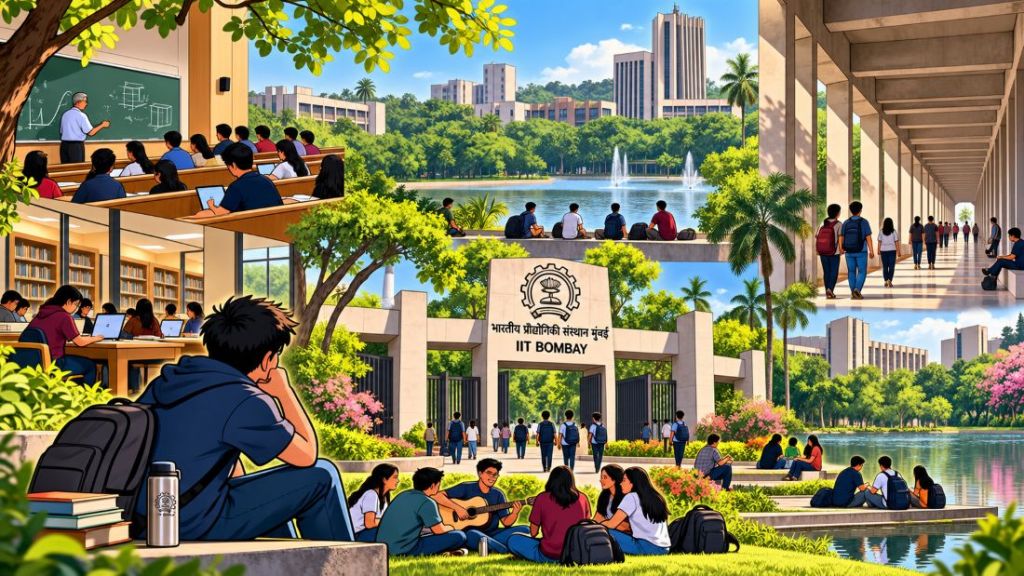
The recent controversy at IIT Bombay has sparked a huge debate on the role of educational institutions, academic pressures and the need for a more humane environment.
While this is much needed, the debate has been hijacked by politicians, pro-reservationists, anti-reservationists, and all kinds of people furthering their own agendas. I don’t want to add to this, except to say that the current framing and implementation of the SC/ST Act may not reduce divisions in our society, but might actually worsen them.
Amidst all this, one of most important issues has been brushed under the carpet – why do so many students commit suicide?
It’s easy to blame the “establishment”, in this case IIT-Bombay. But this is not an isolated problem. Suicides among the youth are growing, and not just at IITs. Between 2014 and 2024, overall suicides grew at 30%, while student suicides grew by 80% to around 14,488 (according to the National Crime Record Bureau (NCRB)).
Official reasons are often based on a recent or proximal event, like failing an exam or rejection by a person of the opposite sex.
Scientific studies have found that while proximal events may be the trigger, the vulnerability develops over months or years; through a combination of psychological, family and environmental causes. Substance abuse, loneliness, a feeling of entrapment, depression, anxiety, parental pressures and many other factors can play a role.
Some of this is due to the enormous pressure we (as parents and society at large) put on children, in our desire to see them succeed, and in the careers we think they should choose.
Children start studying for competitive exams in their early teens. Estimates suggest that half a million children in their mid-teens (or earlier) are sent to coaching hubs (like Kota), where they mostly live in sub-substandard hostels or PGs. They’re isolated from their families and childhood friends, and thrown into a competitive cauldron at an age when identity and emotional resilience are still developing.
Then there is the changing social environment. Social media amplifies comparison, isolation and exposure to relentless social judgement. Digital games or doom-scrolling are fast replacing gully cricket. Even in homes, there is less interaction as everybody is busy on their own screens.
We’d rather talk about marks, ranks and careers than about loneliness, anxiety or depression. Mental illness continues to be stigmatised, and parents are reluctant to accept that their child might need help. Especially when their child appears to be doing well academically.
And in the emotions and politics of the moment, we look to place blame; while ignoring the root causes of vulnerability. While the death of an IIT Bombay student is tragic, is it only the fault of the institute, or teachers?
The IITs have built their reputation on academic excellence and integrity. It is tough to get in, and it is even tougher to get top grades. It is also very difficult to cheat.
This in fact, is why they have built such a great reputation. This is why graduating students get fat packages and prestigious scholarships. This is also why millions of students apply and subject themselves to a grueling process. And this is why parents push their kids to study to get in.
The irony is that just a few weeks back, the Education Minister was forced to resign for not curbing cheating, while today the IIT administration is being harassed for stopping cheating.
If we subject teachers to this kind of media inquisition and legal harassment, who will want to teach at an IIT, or for that matter any Indian university? And will this not harm the future of all our children?

Leave a Reply